



Table of Contents
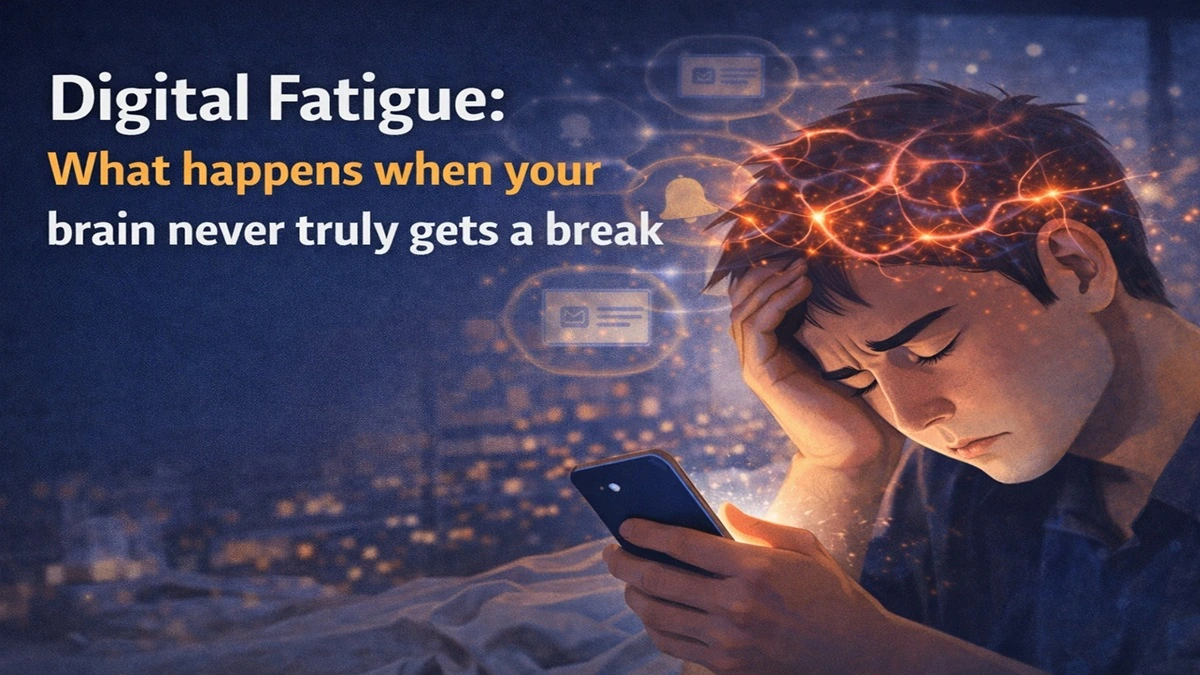
Digital Fatiue: What happens when your brain never truly gets a break
You wake up, but your mind doesn’t feel awake. Even after sleeping, resting, or slowing down, there’s a quiet heaviness that follows you through the day. Thoughts feel crowded. Focus slips without warning. Simple tasks take more effort than they should.
Many people experience this and assume it’s stress, poor sleep, or personal weakness but it’s none of those. It’s a form of mental exhaustion that has become so common in modern life that most people don’t recognize it until rest stops working.
This isn’t ordinary tiredness, and it isn’t traditional burnout. It’s digital fatigue, a kind of mental strain created by constant screens, non-stop information, and attention that never fully disengages.
When your mind feels tired even after rest, it’s often because it hasn’t had a chance to recover from continuous stimulation. Notifications, scrolling, and constant task-switching quietly drain mental clarity, leaving you alert but unfocused, busy but depleted.
This guide explores why digital fatigue is real, how it affects attention, mood, and mental energy, and what anyone anywhere can do to restore clarity and balance in a connected world.
Before you assume this tiredness is normal, it helps to understand what’s actually happening inside your mind—and why rest alone no longer works.
What Is Digital Fatigue and Why It Feels Different From Normal Tiredness
Digital fatigue is not the kind of tiredness that comes from physical effort or a long day of work. It’s a form of mental exhaustion caused by constant exposure to screens, information, and attention demands. Unlike physical fatigue, which fades with rest, digital fatigue lingers quietly affecting focus, motivation, and emotional balance.
When your brain spends hours processing notifications, scrolling content, switching between tasks, and reacting to information, it never fully disengages. Even during breaks, the mind stays active evaluating, comparing, responding. Over time, this creates a state where the brain feels tired even when the body is rested.
This is why many people say they feel alert but unfocused, busy but unproductive. The issue isn’t lack of sleep or effort. It’s that the mind is overloaded without enough true recovery.
Digital fatigue builds gradually, often unnoticed, until mental clarity becomes harder to regain. And because it doesn’t feel dramatic, most people ignore it—assuming this drained state is simply part of modern life.
What makes this exhaustion so confusing is that it often appears even when you’re doing “everything right” like sleeping enough, resting, and slowing down.
Why Your Mind Feels Tired Even After Rest
When people say, “I slept well, but my mind still feels tired,” they assume something is wrong with their sleep or motivation. In reality, the problem usually isn’t rest—it’s what happens to the mind during waking hours.
Your brain was not designed for constant stimulation. Yet throughout the day, it is repeatedly pulled in different directions—messages, notifications, news, short videos, background noise, and rapid task-switching. Even when you take a break, your attention often remains engaged with a screen. The body pauses, but the mind doesn’t.
This creates a gap between physical rest and mental recovery. Sleep restores the body and helps the brain organize memories, but it does not undo the effects of continuous cognitive load. Cognitive load simply means the amount of information your brain is trying to hold, process, and respond to at any given moment. When that load stays high all day, mental fatigue accumulates quietly.
Over time, the brain enters a state where it feels alert but unfocused. You’re awake, yet clarity feels distant. Small decisions feel heavier. Concentration fades faster than it used to. This is why rest alone doesn’t refresh the mind anymore—it hasn’t been given a chance to disengage from constant input.
Mental tiredness after rest is not a personal failure. It’s a signal. The mind isn’t asking for more sleep; it’s asking for less noise, fewer interruptions, and moments of true disengagement.
What most people don’t realize is that it’s not the screen itself that exhausts the mind—it’s what the screen keeps asking your attention to do, again and again.
How Constant Screens Quietly Drain Mental Energy
Screens don’t make the brain tired in the way physical labor does. They drain mental energy in a subtler, more persistent way—by demanding continuous attention, evaluation, and reaction. Every notification, swipe, video, message, or headline asks your brain to make a decision, even if it’s a small one. Over time, these micro-decisions add up.
This is where mental fatigue from screens begins. The brain stays in a semi-alert state, always ready to respond, even when nothing urgent is happening. There is no clear boundary between effort and rest. A “break” often looks like switching from one screen to another, which keeps the same mental circuits active.
Another hidden drain is attention switching. When you move rapidly between apps, tabs, or tasks, your brain doesn’t fully reset. Part of your attention remains tied to what you just left behind. This leftover mental pull reduces clarity and increases exhaustion, even if you haven’t done anything physically demanding.
Over time, constant screen exposure creates digital exhaustion—a state where focus weakens, motivation drops, and the mind feels crowded. You may feel busy all day, yet struggle to recall what truly mattered. The energy isn’t lost in one big moment; it’s quietly spent in hundreds of small ones.
This is why limiting screen time alone doesn’t always help. What matters more is how fragmented your attention becomes while using screens, not just how long you use them.
If constant screens drain energy, the real damage happens when too much information competes for your attention at the same time.
Information Overload and the Fragmented Mind
Information overload occurs when your brain receives more input than it can process meaningfully. It doesn’t arrive as a single overwhelming moment. It builds gradually—through headlines, messages, videos, updates, and opinions layered on top of each other throughout the day.
Each piece of information asks for a response, even if it’s just a brief reaction. Should you read this? Ignore that? Save it for later? These tiny decisions quietly consume mental energy. Over time, the mind becomes fragmented, meaning attention is spread thin across many incomplete thoughts instead of resting with one.
This fragmentation makes it difficult to focus deeply. You may start tasks with good intentions but lose clarity quickly. Reading feels harder. Listening requires more effort. Even moments of quiet can feel uncomfortable because the mind has grown used to constant input.
What makes information overload especially exhausting is that it rarely feels urgent. Nothing seems wrong on the surface. Yet beneath that calm appearance, mental resources are being stretched without recovery. The brain remains active, scanning for what’s next, unable to settle.
When attention is fragmented for long periods, mental fatigue becomes the default state. Not because you’re doing too much—but because your mind never has the space to finish what it starts, rest, and reset.
What often makes this mental exhaustion worse is the belief that doing more at once will somehow help us keep up.
Why Multitasking Makes Digital Fatigue Worse

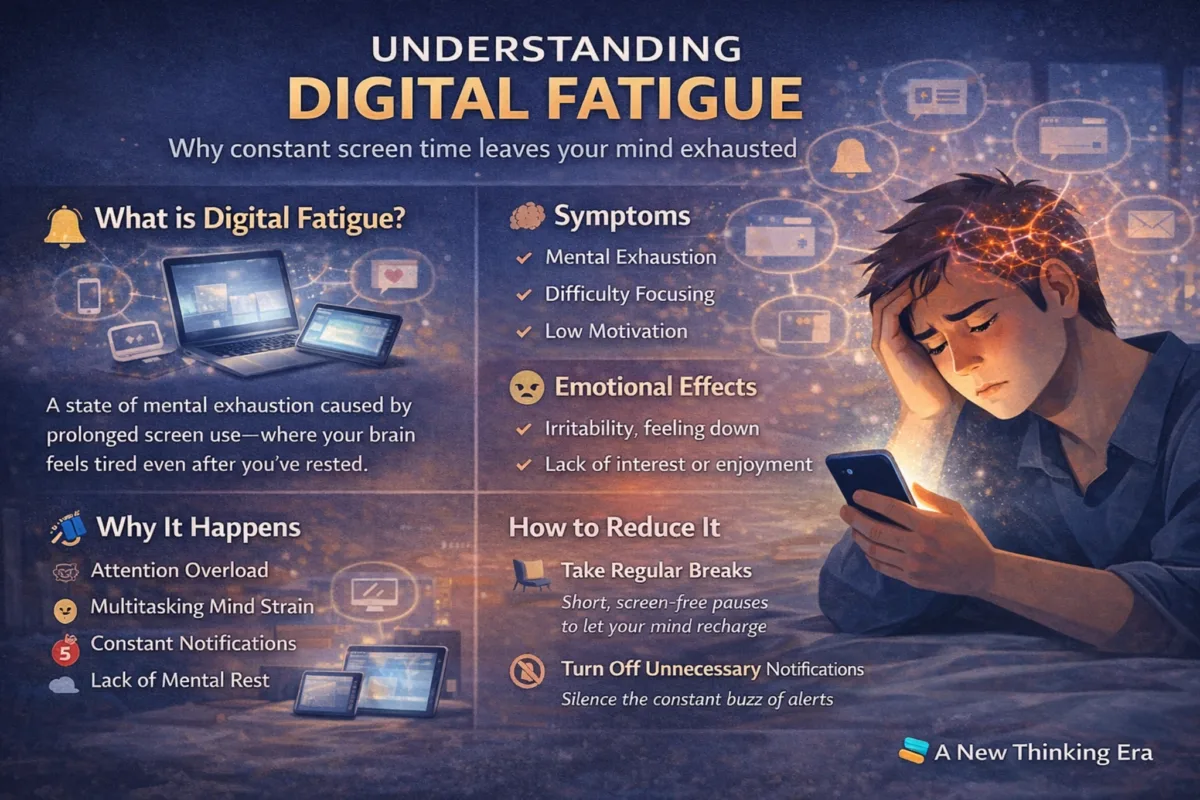
Multitasking feels productive on the surface. Answering messages while working, switching between tabs, listening to content while scrolling—it all seems efficient. In reality, the brain doesn’t truly multitask. It rapidly switches attention from one thing to another, paying a hidden cost each time.
Every switch forces the mind to pause, reorient, and reload context. That process uses mental energy, even when the task itself feels small. Over time, these constant shifts leave the brain feeling strained and scattered. This is one of the quiet reasons people experience digital fatigue without realizing what’s causing it.
Multitasking also prevents mental closure. Tasks are started but not fully finished in the mind. Thoughts remain open-ended, creating a sense of unfinished business that follows you throughout the day. This lingering mental tension contributes to fatigue, even during moments that are meant to be restful.
The result is a mind that feels busy but unfulfilled, active but unfocused. You may complete many things, yet feel oddly dissatisfied and drained at the end of the day. The exhaustion doesn’t come from effort alone—it comes from never allowing attention to settle long enough to recover.
Reducing multitasking isn’t about doing less. It’s about allowing the mind to move through tasks with continuity, so mental energy isn’t constantly lost in transition.
What many people notice next isn’t just mental tiredness—but a quiet change in how they feel about life itself.
The Emotional Cost of Constant Stimulation
Digital fatigue doesn’t stop at focus and concentration. Over time, it begins to affect emotions in subtle but meaningful ways. People often describe feeling less patient, less present, or oddly disconnected—without understanding why. The mind may still be busy, but emotional energy starts to thin out.
One common effect is emotional dullness. When the brain is exposed to constant stimulation, it becomes less sensitive to everyday experiences. Simple pleasures—conversation, music, reading, small achievements—don’t land the way they once did. This isn’t a lack of gratitude or interest; it’s a nervous system that hasn’t had enough space to reset.
Another effect is low-level anxiety. Constant alerts, updates, and incoming information keep the brain in a mild state of readiness. Even when nothing is wrong, the body and mind stay slightly tense. This can show up as restlessness, overthinking, or a feeling of being “on edge” without a clear cause.
Some people experience the opposite—emotional flatness. When stimulation becomes overwhelming, the mind protects itself by turning the volume down. Feelings become muted, not because life is empty, but because the system is overloaded.
These emotional shifts are often mistaken for personality changes or motivation problems. In reality, they are signals of digital exhaustion—a mind that has been asked to engage continuously, without enough moments of true rest.
This is where many people get stuck—because even when they finally slow down, the mental clarity they’re hoping for doesn’t return.
Why Rest Alone Doesn’t Restore Mental Clarity
When mental fatigue sets in, the first instinct is to rest more. Sleep longer. Take time off. Do less. While rest is important, it often doesn’t resolve digital fatigue on its own—and that can feel deeply frustrating.
The reason is simple but rarely explained: rest stops effort, but it doesn’t always stop stimulation. Many forms of modern rest still involve screens, input, and passive consumption. Watching videos, scrolling social media, or browsing content may feel relaxing, but the mind remains active—processing images, ideas, and emotional cues.
True mental recovery requires disengagement, not just inactivity. The brain needs periods where it isn’t responding, deciding, comparing, or absorbing new information. Without those pauses, mental clarity struggles to return, no matter how much time you spend resting.
Another factor is unfinished mental loops. When attention is constantly interrupted, thoughts and tasks remain partially open in the mind. These unresolved loops quietly consume mental energy in the background, even during rest. That’s why your body may feel relaxed, but your thoughts keep drifting or replaying.
This disconnect between rest and recovery often leads people to blame themselves. In reality, the mind isn’t resisting rest—it simply hasn’t been given the kind of rest it needs. Mental clarity returns not from doing nothing, but from creating space where attention can fully settle and reset.
Digital fatigue can quietly break your routines. If you want a simple, realistic way to build discipline and keep showing up—read this step-by-step guide on consistency.
Read: How to Stay Consistent →What makes digital fatigue even harder to recognize is that it doesn’t affect just one type of person—it quietly shows up wherever attention is constantly demanded.
Who Is Most Affected by Digital Fatigue—and Why
Digital fatigue doesn’t discriminate by age, profession, or lifestyle. It tends to affect people whose daily lives require sustained attention, frequent switching, or constant availability—conditions that have become increasingly common across the world.
Students are especially vulnerable. Online learning, digital assignments, and constant access to short-form content train the mind to jump quickly between topics. Over time, deep focus becomes harder, reading feels more effortful, and mental tiredness appears even when academic hours aren’t excessive.
Working professionals experience a different version of the same strain. Messages arrive outside working hours. Tasks stretch across multiple platforms. Boundaries between work and personal time blur. Even during rest, the mind remains half-engaged, waiting for the next notification. This keeps mental energy from fully recharging.
Creatives and knowledge workers often feel the impact more intensely. Their work depends on clarity, originality, and sustained thinking—abilities that weaken when attention is constantly fragmented.
Even people who don’t work on screens all day can experience digital fatigue through continuous exposure to news, social media, and background content. The common thread isn’t workload—it’s persistent mental engagement without enough moments of disengagement.
Digital fatigue doesn’t mean something is wrong with you. It reflects how modern life asks the mind to operate—constantly alert, rarely at rest.
When mental energy stays low for long enough, the change isn’t always dramatic—it’s quiet, gradual, and easy to miss.
How Digital Fatigue Quietly Changes Motivation and Drive
One of the most overlooked effects of digital fatigue is how it alters motivation. People often assume they’ve become lazy or lost ambition, when in reality, their mental energy has been slowly depleted. Motivation depends on clarity and emotional engagement—both of which weaken when the mind is overstimulated.
Tasks that once felt manageable begin to feel heavier. Not because they’re harder, but because the brain lacks the energy to initiate and sustain effort. Decision-making feels draining. Starting becomes more difficult than finishing. This is why people procrastinate even when they care about the outcome.
Digital fatigue also reduces the sense of reward. When the brain is constantly flooded with stimulation, it becomes less responsive to small wins. Progress feels less satisfying, which further lowers drive. Over time, this creates a cycle: reduced motivation leads to avoidance, which increases mental clutter and exhaustion.
Importantly, this shift isn’t a personality change. It’s a state. When attention is protected and stimulation is reduced, motivation often returns naturally—without forcing discipline or willpower.
Understanding this helps people stop blaming themselves. The issue isn’t a lack of desire. It’s a mind that has been stretched too thin for too long.
Once you recognize digital fatigue for what it is, the next question naturally follows: how do you recover without unplugging from the world you still have to live in?
Practical Ways to Recover From Digital Fatigue Without Escaping Technology
Recovering from digital fatigue doesn’t require quitting technology, deleting apps, or stepping away from modern life. What it requires is changing how your attention interacts with stimulation. Small, intentional shifts can restore mental clarity far more effectively than extreme solutions.
One of the most powerful steps is creating low-stimulation moments during the day. These are short periods where nothing asks for your attention—no scrolling, no background content, no input. Sitting quietly, walking without headphones, or doing a simple task without a screen allows the nervous system to reset. Even a few minutes can reduce mental strain.
Another important change is reducing attention switching. Instead of moving constantly between tasks, try completing one thing at a time, even if it’s small. Single-tasking allows the mind to settle, conserving mental energy that would otherwise be lost in transition.
It also helps to redefine rest. True mental rest isn’t passive consumption; it’s disengagement. Activities like reading slowly, journaling, light physical movement, or spending time in nature give the brain space to recover without overstimulation.
Finally, gentle boundaries matter more than strict rules. Turning off non-essential notifications, creating phone-free moments, or setting a natural stopping point for screen use helps the mind feel less pressured to stay alert all the time.
Recovery isn’t about doing less overall—it’s about giving your attention fewer places to go, so it can finally rest.
What truly changes things isn’t one big reset—it’s the small, almost unnoticeable habits that slowly give your mind room to breathe again.
Small Daily Habits That Rebuild Mental Clarity Over Time
Mental clarity doesn’t return all at once. It rebuilds gradually, through everyday choices that reduce noise and protect attention. These habits don’t need to be dramatic. In fact, the quieter they are, the more effective they tend to be.
One powerful habit is starting the day without immediate input. When the first moments after waking are spent checking messages or news, the mind enters reactive mode before it has a chance to settle. Giving yourself even ten minutes of screen-free time—stretching, breathing, or simply sitting—sets a calmer mental tone for the day.
Another helpful practice is creating natural stopping points. Instead of endless scrolling or working until exhaustion, decide in advance when you’ll stop. Closure matters to the brain. Finishing intentionally reduces the feeling of unfinished loops that quietly drain mental energy.
Pay attention, too, to how often silence appears in your day. Silence isn’t empty; it’s restorative. Short moments without background content—no music, no podcasts, no videos—allow thoughts to organize themselves. This is when clarity quietly returns.
Finally, build habits that encourage depth over speed. Reading a few pages slowly, completing one task fully, or having an uninterrupted conversation helps retrain attention. Over time, the mind becomes steadier, less reactive, and more capable of focus.
These habits may seem small, but together they create something essential: a mental environment where clarity can grow again, naturally and sustainably.
When these small habits begin to work, a bigger realization often follows: this isn’t just a personal issue—it’s a defining challenge of modern life.
Why Digital Fatigue Matters in the Modern World
Digital fatigue isn’t only about feeling tired or unfocused. It shapes how people think, learn, work, and relate to the world around them. When attention is constantly stretched, depth becomes harder to access—not just in tasks, but in conversations, creativity, and decision-making.
In a world built around speed and constant availability, mental clarity has quietly become a scarce resource. People skim more, react faster, and pause less. Over time, this changes how problems are approached. Reflection gives way to urgency. Thoughtfulness gives way to immediacy. The cost isn’t always obvious, but it shows up in shallow focus, rushed choices, and emotional fatigue.
Digital fatigue is no longer just a personal concern; it’s increasingly being recognized as a broader well-being issue. Guidance from the World Health Organization (WHO) highlights how modern environments often reduce psychological recovery time, especially when people remain mentally engaged long after work or daily responsibilities end. When the mind is rarely allowed to disengage, emotional balance and long-term mental health can quietly suffer—making digital fatigue not just a lifestyle issue, but a public well-being concern.
Digital fatigue also affects how meaning is experienced. When the mind is overwhelmed, it struggles to fully engage with moments that require presence—learning something new, building relationships, or simply enjoying quiet satisfaction. Life may feel busy and full, yet strangely thin.
Understanding digital fatigue helps shift the conversation away from self-blame. The issue isn’t that individuals lack discipline or resilience. It’s that modern environments demand sustained attention without offering enough recovery. Recognizing this matters because it changes the solution—from pushing harder to living more intentionally.
As technology continues to shape daily life, the ability to protect attention and mental clarity becomes more than a wellness choice. It becomes a foundational skill for living well in the modern world.
Once you see digital fatigue as a shared human challenge, the question shifts from “What’s wrong with me?” to “What can I do differently—starting now?”
Practical Takeaways and Life Lessons From Digital Fatigue
Digital fatigue doesn’t require a dramatic lifestyle overhaul to improve. What it asks for is awareness—and a few deliberate choices that protect mental energy instead of draining it.
One of the most important lessons is this: rest and recovery are not the same thing. Rest pauses activity, but recovery restores clarity. Recovery happens when attention is allowed to settle, not when it’s redirected to more stimulation. Learning to recognize this difference changes how you choose to spend your downtime.
Another takeaway is that attention is finite. Every notification, switch, or scroll uses a small portion of it. When attention is spent carelessly, fatigue follows. When it’s protected, energy returns. This doesn’t mean avoiding technology—it means using it with intention rather than reflex.
Digital fatigue also teaches the value of completion. Finishing one thing before moving to the next gives the mind closure. Closure reduces background mental tension, making focus feel lighter instead of forced.
Perhaps the most grounding lesson is this: mental clarity is not something you chase—it’s something you allow. It emerges when noise is reduced, boundaries are respected, and the mind is given permission to slow down without guilt.
These insights aren’t rules to follow perfectly. They’re reminders. Small adjustments, practiced consistently, create a mental environment where clarity, motivation, and emotional balance can gradually return.
Conclusion: Your Mind Isn’t FailinG It’s Asking for Space
If your mind has felt tired even after rest, it doesn’t mean something is wrong with you. It means you’ve been living in a world that constantly asks for your attention, rarely giving it room to settle. Digital fatigue isn’t a personal weakness or a lack of discipline. It’s a natural response to sustained stimulation without enough recovery.
The quiet exhaustion many people feel today isn’t solved by pushing harder, sleeping longer, or consuming more content in the name of relaxation. It begins to ease when attention is treated as something valuable—something worth protecting rather than spending automatically.
Mental clarity doesn’t return through force. It returns through space. Through moments of disengagement. Through fewer interruptions and more intention. When the noise softens, the mind remembers how to steady itself again.
Digital fatigue is real—but so is recovery. And it doesn’t require escaping modern life. It requires learning how to move through it with awareness, balance, and respect for the limits of the human mind.
By this point, many readers realize they’re not alone but still want clear answers to the questions that keep coming up in their own minds.
Frequently Asked Questions About Digital Fatigue
-
Why do I feel mentally tired even after sleeping enough?
Because sleep restores the body, but digital fatigue comes from cognitive overload during waking hours. When your mind is constantly processing screens, notifications, and information, it doesn’t get the kind of disengagement needed for full mental recovery. Rest pauses effort; it doesn’t always reduce stimulation.
-
Is digital fatigue the same as burnout?
No. Burnout is usually tied to long-term stress, pressure, or emotional overload from work or responsibilities. Digital fatigue is caused by constant attention fragmentation and overstimulation, even when work hours are reasonable. You can feel digitally exhausted without feeling burned out.
-
Can screen time really cause mental exhaustion?
Yes. Extended screen use keeps the brain in an alert, responsive state. Frequent switching between apps and content drains mental energy, reduces focus, and creates a feeling of being mentally “full” but unsatisfied—one of the core signs of digital fatigue.
-
Why does scrolling feel relaxing at first but tiring later?
Scrolling provides short bursts of stimulation that feel easy and engaging. Over time, however, the brain becomes overloaded by constant input and decision-making. What begins as relaxation slowly turns into mental fatigue, especially when scrolling replaces true disengagement.
-
How long does it take to recover from digital fatigue?
Many people notice improvement within one to three weeks of reducing stimulation and protecting attention. Recovery isn’t instant—it’s gradual. As mental noise decreases, clarity, motivation, and focus tend to return naturally.
-
Do I need a full digital detox to feel better?
No. Extreme detoxes are often unnecessary and difficult to sustain. Small, consistent changes—like reducing notifications, single-tasking, and creating low-stimulation moments—are more effective and realistic for long-term recovery.
This article is shared for educational and inspirational purposes only. It is not medical advice and should not be used to diagnose or treat any condition. If you are experiencing persistent fatigue, anxiety, sleep issues, or symptoms that affect daily life, please seek guidance from a qualified healthcare or mental health professional.
Individual experiences vary. Any suggestions in this post are general lifestyle guidance and are meant to support healthier digital habits—not replace personalized care.


Reena Singh is the founder of A New Thinking Era — a motivational writer who shares self-help insights, success habits, and positive stories to inspire everyday growth.

